

Singapore retail vacancies going up as more tenants look to exit
Knight Frank Singapore’s head of Retail Ethan Hsu weighs in on the impact of more F&B icons shuttering
23 June 2025
Presenter:
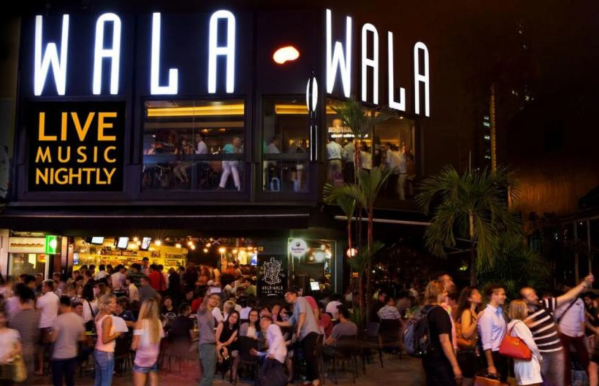
A Holland Village icon is shuttering after 30 years in business. Wala-Wala, a bar that's been at the corner of Lorong Mambong for over 30 years and a go-to for many university students from the 90s, has been in the red over the last four years, sparked by pandemic restrictions. Another Holland Village, mainstay, Crystal Jade, is also closing.
Holland Village is yet another victim of the accelerating vacancy rate in Singapore's retail scene. In the first quarter of this year alone, about 450 retail outlets closed each month, and island wide retail vacancies actually rose to 6.8%, up 0.4% the quarter before.
What kind of future lies ahead for Singapore's retail? Let's check in with Ethan Hsu, Head of Retail at Knight Frank Singapore. The national retail vacancy hit 6.8% in the first quarter of this year. This is up from 6.2% in Q4 2024. Are these numbers concerning to you?
Ethan Hsu:
I think it's helpful if we take a step back and look at the bigger picture. As you rightly mentioned, according to the latest numbers from URA, the island wide occupancy rate for retail spaces in Singapore, on the flip side, was 93.2% in the first quarter of 2025, and the previous quarter, it was 93.8% in Q4 of 2024.
And when we look at the biggest private mall operators here, which are CapitaLand and Frasers, they're still showing strong numbers as well, with occupancy rates of 99.3% and 99.7%. That tells us that, overall, retail spaces are still very much in demand. Now it's important to remember that retail covers a wide range of businesses, from supermarkets and clothing stores to hair salons, dental clinics, tuition centers, gyms, and all kinds of food and beverage outlets. And each of these sectors moves through its own business cycle, depending on how consumer habits change over time. So, if one particular trade isn't growing as fast as before, it doesn't necessarily mean the whole retail scene is in trouble. In fact, this diversity is what gives our retail landscape strength. While some sectors may be going through a rough hedge, others are expanding, like health and wellness, affordable dining, and hybrid retail models that combine both online and offline experiences. So yes, the environment is more competitive, and businesses have to work harder to attract customers, but we're also seeing innovation, resilience and new growth areas across the board.
Presenter:
You talked about how certain types of retail businesses go through a cycle. What are the features of a retail cycle? How do we know a particular brand or a particular shop or a particular genre, if you will, category of retail is going through a cycle and is meeting its end, and therefore we should be looking for its next iteration.
Ethan Hsu:
I think most retail trades go through cycles because, you know, depending on whether the operator decides to rejuvenate the brand after some time, because it gets a little bit outdated, and consumers get a bit bored, because in Singapore, I mean, consumers are fickle. They have choices about what, where to spend their money, whether it's in the product sector or is the service sector. We do have options. So, for a retailer who is able to change with consumer trends and tastes, because consumer trends and tastes will evolve over time, then they will be able to stay relevant, and then the business cycle continues, you know, to extend. But if they didn't, if a particular operator does not put in investment to train its staff, or to make sure that its product you know, if you're in F&B, to make sure that your menu changes after some time, to do certain, you know, to cater to changing consumer preferences, then I think it will be hard for them to stay relevant.
Presenter:
As a follow up to that, there are many retail tenants terminating their leases prematurely. We want to talk about why that might be so, and whether or not, because you talked about cycles. Are there certain types of retail shops that have a higher level of pre-termination of leases?
Ethan Hsu:
I think that there are some challenges, prevailing challenges in the retail sector that kind of cuts across the board for all. And I think that there will be some operators that will be able to cope better than others when it comes to these challenges. So, these are the three, being main challenges of rising costs from rent, materials and labor, lower consumer demand, which is leading to lower revenue and profits, because now, you know, consumers are a little bit, you know, tightening their belts a little bit more because of the uncertainties of the economy lying ahead, and because things have gotten more expensive, they decide to spend less and also increased competition from new entrants and even substitutes, right.
We heard recently about the issue with home-based cafes, for example, diluting the pie for F&B operators. So due to these three challenges, a lot of tenants have been facing, feeling the pressure, especially with the weaker demand and more spending going overseas, which also means lower sales. And one of the biggest challenges is rent, right? Because it makes up a large part of a retailer's expenses, and it's a fixed cost. So even if the business isn't doing well, the rent still has to be paid. You can't just say business is slow, so I won't pay rent this month. It doesn't work that way. And it's not just rent. Staying open means you're also paying for staff, ingredients, utilities, marketing and all the little things that add up, like packaging and cleaning supplies, etc. So, because of all that, some retailers, especially in the retail and F&B space, may decide not to wait until their lease ends, which is usually about three years. Instead, they may, they may choose to close earlier and cut their losses.
Presenter:
And when they do that, are they typically withdrawing from the market entirely, or are they perhaps moving to the heartlands or even online, where overheads are cheaper?
Ethan Hsu:
I think we are seeing a mixture of all because some businesses might decide to leave the market altogether, but others will find new ways to keep going. Retail isn't one size fits all, so depending on their setup, some might shift to selling online or use other methods, like dark stores or club kitchens to reach customers. It really depends on, I think the retailers, because a lot of them do try to adapt in creative ways. They can shift to online platforms, streamline operations, or even collaborating with others to share their costs or diversify their revenue streams. Yeah, so and as consumer habits evolve, we're also seeing new opportunities pop up in areas like value for money, dining, health and fitness, wellness, and experiential-like retail. So, I think it's a challenging time for some and others are finding new ways to survive and even thrive in this challenging landscape.
Presenter:
Looking at all of this, in areas like Orchard and Holland V, we've heard of you know, prominent tenants who are shuttering their businesses. The latest would be a few in the Holland Village area. Do you think this will have a domino effect on other business within that area?
Ethan Hsu:
I think there shouldn't have a domino effect, because the shops in Holland Village, with the exception of the new One Holland Village, which is by the Far East Organization, the rest of the shop spaces are mostly owned by strata landlords, which means individual landlords, and some of these landlords have owned these locations for a long time, and because when they acquired their property, prices would have been cheaper in the past, so the rate, the rental yield, would have been better for them at this point in time, because the entrance cost was lower.
And so, it really depends on the entry point. It also depends on the trade. Like I mentioned earlier, I think some categories of trade do tend to be more resilient than others, especially like if you're in the service line, for example, if you are in the beauty esthetics category, you might have already developed a loyal fan base, right, a customer base that probably wouldn't just jump ship, because you’ve increased prices. They usually follow their therapist or their beauty surgeon wherever they go.
Presenter:
Indeed, that is something we're seeing more of in recent days. I have to say, personally, that's what I've noticed. A lot more esthetic clinics, a lot more medical facilities are opening up. I suppose they would have the better financial positioning. I suppose. And in certain malls, entire floors are given up to aesthetic clinics. You think about Paragon, Wheelock Place.
Ethan, this has been really insightful. Thanks very much for laying the land for us.
Ethan Hsu:
Most welcome. Thank you!