

SERVICES
Occupier strategy and solutions
Secure the right commercial space to support your business objectives.
We help businesses identify, secure and optimise commercial real estate that aligns with their operational requirements, workforce needs and long-term goals.
Real estate decisions play an important role in business performance, operational efficiency and future growth. Our Occupier Strategy and Solutions team provides advice across a broad range of commercial property types, helping organisations make informed decisions throughout the occupancy lifecycle.

How we work
Combining market knowledge with a client-focused approach, we support businesses across office, industrial and specialised spaces.
From market analysis and site selection to lease negotiations and occupancy planning, we help you secure property solutions that support your operational and commercial objectives.
We work with clients at every stage of the occupier journey, providing advice on property search, lease strategy, portfolio planning and space utilisation. Our solutions are designed to help businesses manage occupancy costs, improve operational efficiency and respond confidently to changing business needs.
Our occupier strategy and solutions services
Commercial space search and acquisition
We help businesses identify and secure office, industrial and specialised spaces that align with operational requirements, workforce needs and long-term objectives.
Lease advisory and occupancy optimisation
Our team provides lease negotiation, occupancy planning and space utilisation advice to help businesses improve efficiency, manage costs and support evolving workplace requirements.
Portfolio strategy and business planning
We support organisations with portfolio planning and occupancy strategies that help align property decisions with operational priorities and future business goals.
The Singapore office market remained resilient in Q2 2026, underpinned by renewal-led demand amid the limited CBD supply. Although occupiers continue to be cautious amid geopolitical uncertainties, Singapore’s safe haven appeal and the ongoing flight to quality are sustaining interest in prime assets, with rents well-supported.
Tridiana Ong
Head, Occupier Strategy & Solutions
Case studies
Explore examples of how we've helped our clients with their their leasing, relocation, project management and fit-out needs.
When Ferrero's lease renewal approached, its management had to decide whether to remain in its existing premises or relocate to a newer office environment that would support long-term workplace needs.
Following a detailed review of available options, Grade A development Labrador Tower was selected as arelocation address. The move marked a significant upgrade from the previous business park space in Science Park, providing a higher-quality workplace experience while securing favourable commercial terms.
Working closely with Ferrero, we negotiated a packageincluding an additional rent-free period at the commencement of the lease (on top of the fit-out rent-free period) to reduce the effective gross rent.
The team also secured enhanced lease flexibility through a Right of First Offer (ROFO) on the remaining space on the same floor, giving Ferrero future expansion options. A waiver of the redevelopment clause was negotiated to provide greater long-term occupancy certainty.
This project demonstrated how a well-executed relocation strategy can achieve more than a lease renewal by combining workplace improvement with stronger commercial and occupancy terms.
Prior to its upcoming lease expiry, the company explored whether renewing its existing premises or relocating would better support its operational and workforce requirements.
After assessing market options, it opted to relocate from Changi Business Park to Perennial Business City in Jurong East. The move required careful stakeholder management to navigate the shift from Singapore's east to west corridor.
To support decision-making, we conducted an in-depth commute study to assess the impact on employees and ensure alignment across the business. And on top of securing a new workplace location, we negotiated a package that delivered meaningful cost savings and capital support.
This included an additional rent-free period at the start of the lease, on top of the fit-out rent-free period, helping to reduce occupancy costs. The team also secured landlord contributions towards the client's CAPEX requirements, including the construction of raised floors and ceiling boards, reducing upfront investment costs.
This project ts testament that relocation can be used to improve both workplace outcomes and financial performance by combining data-driven workplace planning with strong commercial negotiations.
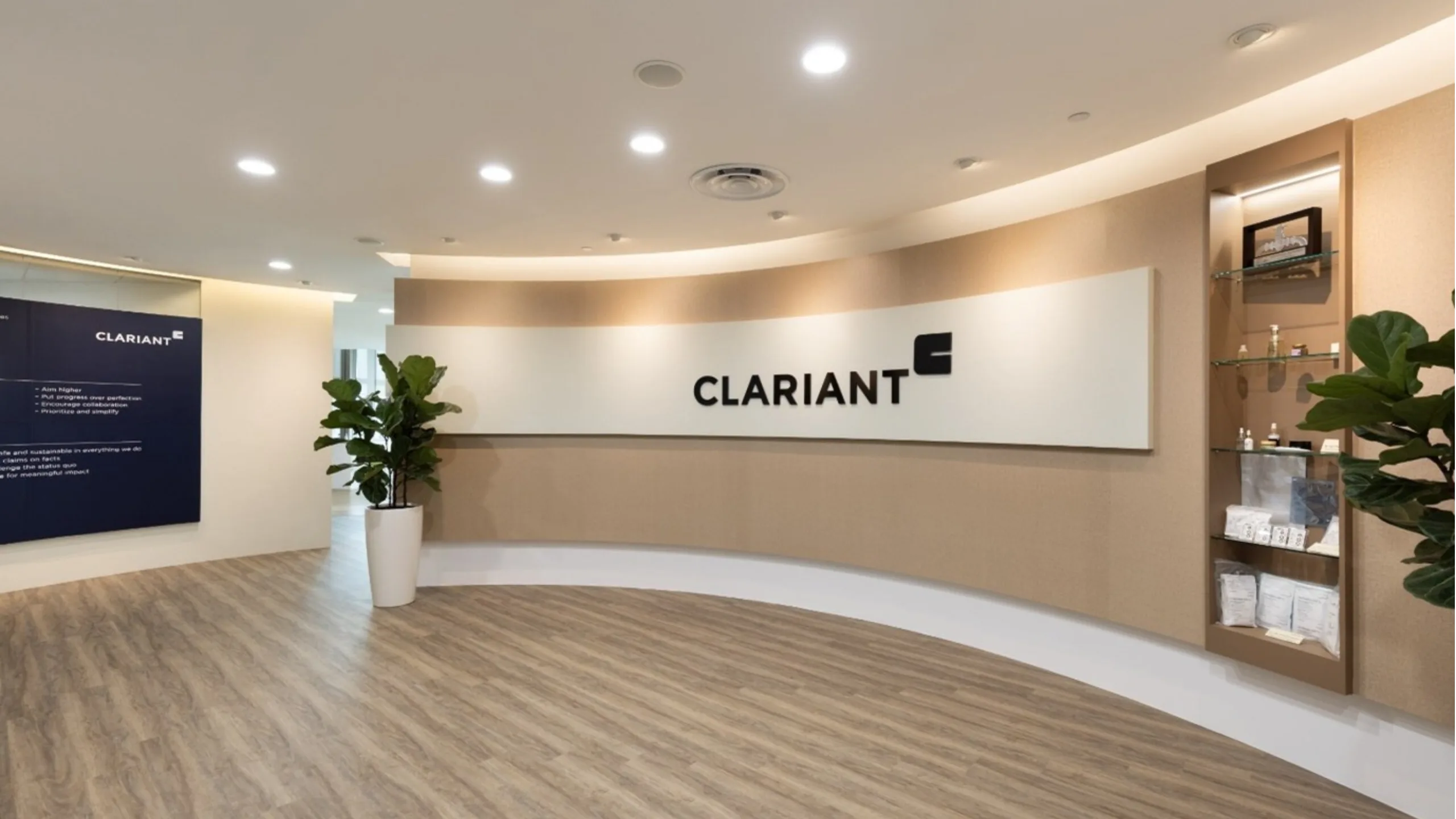
Clariant appointed us to align its workplace strategy with regional business objectives while improving workplace performance, maximising space efficiency and reducing operating costs.
Our transaction management team negotiated a new industrial lease agreement that achieved a reduction of more than 12% in rental costs while reducing the workspace footprint by 50%. We also carried out workplace utilisation and behaviour analysis to develop a business case aligned with the client's post-pandemic workplace requirements and growth objectives.
Working alongside OSCA ASIA, we delivered a workplace transformation programme from consultancy through to project execution. The resulting workplace introduced agile working principles, enhanced collaboration spaces and supported a more flexible environment aligned with the client's future growth strategy.

Our Workplace Consulting & Project Management team helps organisations develop workplace strategies, assess space utilisation, implement hybrid working models and deliver workplace transformation projects.
Frequently asked questions
Flexible workspaces
Flexible workspaces offer businesses significantly more agility than traditional office leases, with commitment periods ranging from month-to-month agreements to fixed terms of six, 12, or 24 months, depending on the operator and workspace type.
When evaluating options, occupiers should consider how easily they can scale their footprint as business needs evolve. Some operators can accommodate team growth within the same location, while others offer the flexibility to move between office sizes or access multiple locations across their network.
Key considerations include notice periods, renewal terms, expansion rights, early termination provisions, and the ability to reconfigure workspace layouts. Understanding these factors upfront can help businesses select a solution that supports both current and future workplace requirements.
Most flexible workspace memberships in Singapore include essentials such as high-speed internet, utilities, air-conditioning, cleaning services, office furniture, pantry access, mail handling, and access to shared facilities.
However, advertised rates do not always reflect the total occupancy cost. Additional charges may apply for meeting room usage, printing, visitor parking, after-hours air-conditioning, event spaces, lockers, telephone services, or enhanced IT infrastructure.
Occupiers should evaluate both the inclusions and potential add-on costs when comparing providers. Businesses with specialised requirements, such as dedicated Wi-Fi, server rack space, or enhanced connectivity, should also confirm whether these services are available and whether additional fees apply.
Meeting room offerings vary considerably between flexible workspace operators. Some memberships include complimentary meeting room credits, while others charge separately based on usage, room size, or booking duration.
Businesses that regularly host clients, workshops, or internal meetings should assess the number and variety of meeting spaces available, occupancy capacities, video conferencing capabilities, booking policies, advance reservation requirements, and peak-hour availability. A comprehensive evaluation of workplace facilities can help ensure the selected workspace supports both day-to-day operations and future business needs.
Many flexible workspaces can accommodate advanced business requirements, including dedicated internet connections, secure Wi-Fi networks, VLAN configurations, access control systems, private server installations, and enhanced cybersecurity measures.
For organisations operating in regulated sectors such as finance, legal, healthcare, or technology, it is important to assess whether a workspace can support specific security, privacy, and compliance requirements. This may include data protection standards, confidential meeting facilities, secure document storage, and business continuity measures.
Occupiers should also review physical security features such as visitor management processes, CCTV coverage, key card access systems, and restricted-access areas to ensure alignment with internal policies and regulatory obligations.
Many flexible workspace operators allow occupiers to use their workspace as a registered business address for company registration, banking, accounting, and corporate correspondence purposes.
However, eligibility may vary depending on the operator and membership type. Private office memberships typically include business address usage, while hot-desking or shared workspace memberships may offer this feature only as an optional add-on.
Before committing to a workspace, businesses should confirm whether business registration is permitted, whether mail handling services are included, and whether any restrictions apply that could affect their operational requirements.